
₹0


MRP (Inclusive of taxes)
MRP ₹ (Incl. of all taxes)
Couldn't load pickup availability
Product Description
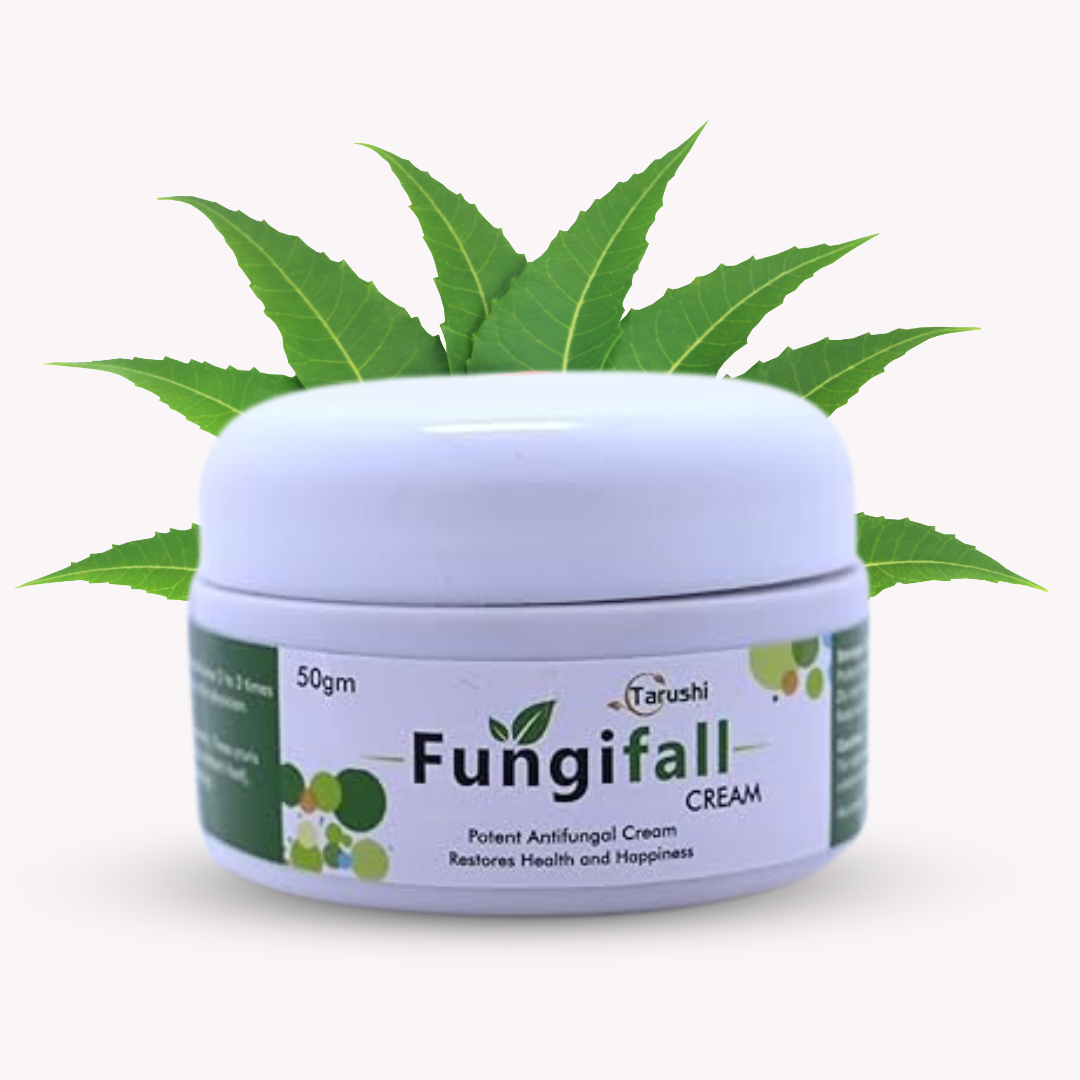
Tarushi Formulations Fungifall Cream is a carefully crafted herbal cream enriched with natural ingredients to support skin health. Formulated with the goodness of Haldi, Sahajna, Chakramard, and Neem Oil, this cream provides soothing care and hydration for the skin. Its unique blend of herbs like Lahsun, Bakuchi Oil, and Castor Oil makes it a nourishing addition to your skincare routine. Free from harsh chemicals, it is suitable for daily use. This product is not intended to diagnose, treat, cure, or prevent any disease. Always perform a patch test before use and consult a dermatologist if necessary.
Ingredients
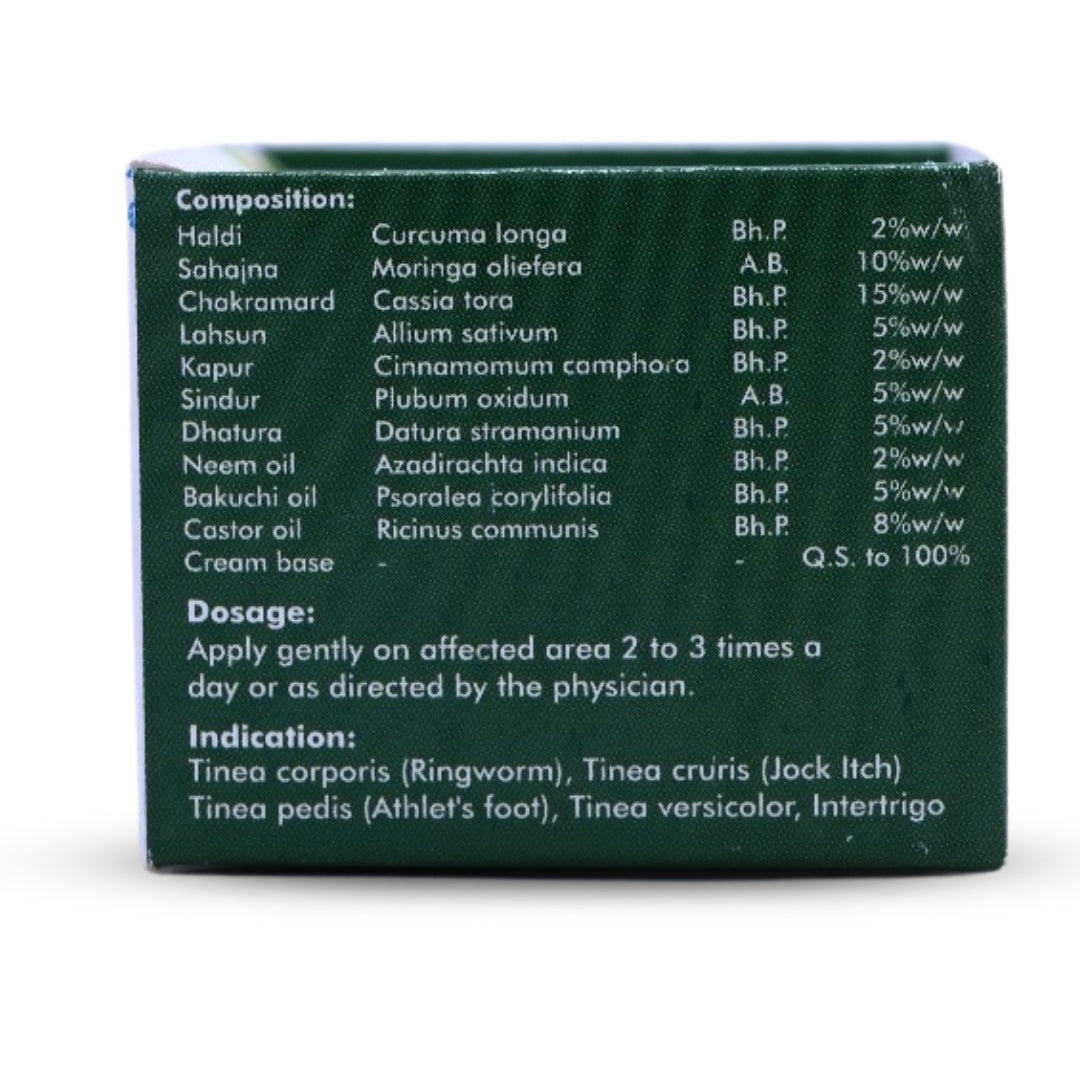
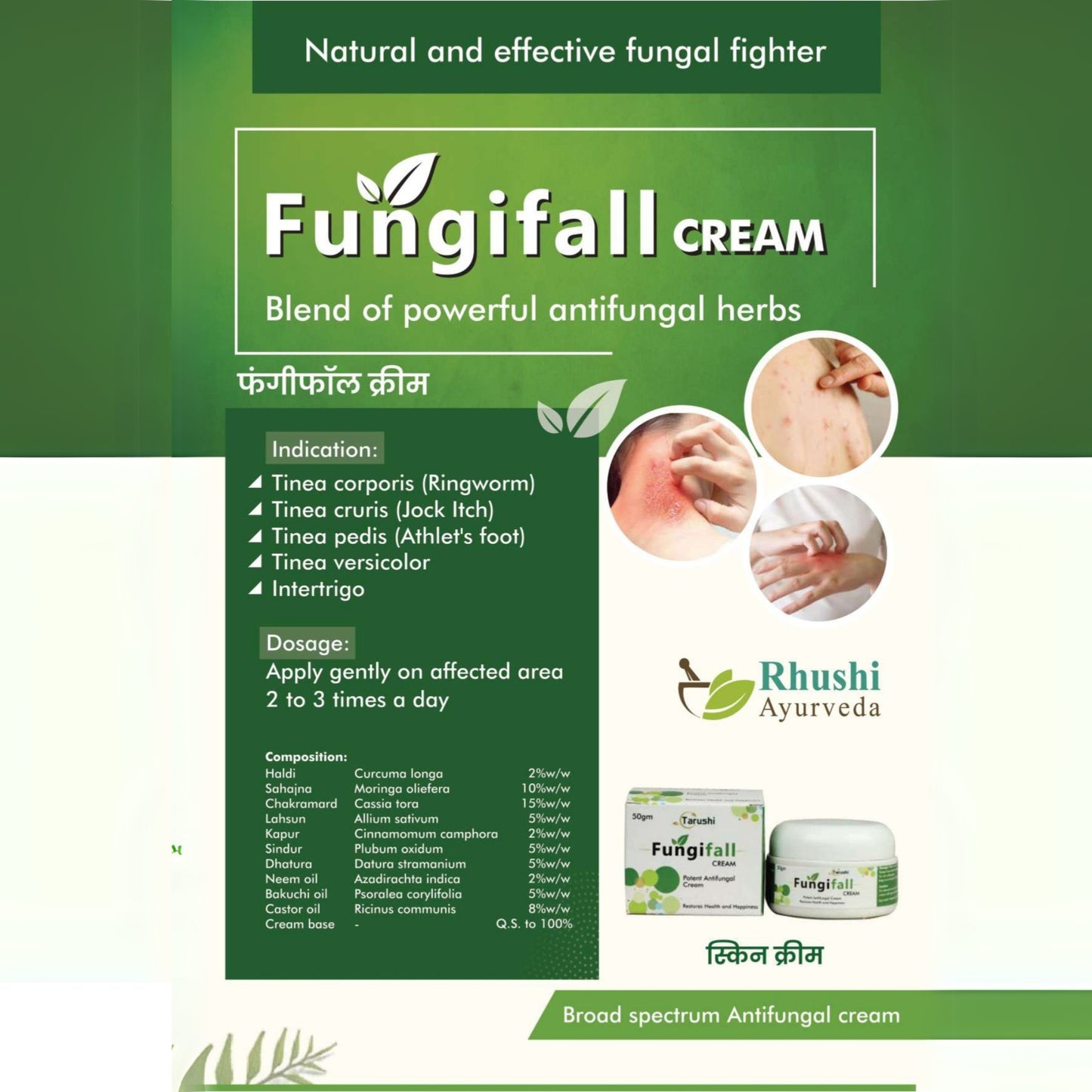
Haldi, Sahajna, Chakramard, Lahsun, Kapur, Sindur, Dhatura, Neem Oil, Bakuchi Oil, Castor Oil
Dosage
Apply gently 2-3 times a day on the affected area or as directed by the Physician.
Key Benefits
Natural Nourishment: Enriched with Neem Oil and Haldi for effective skin nourishment.
Soothing Support: Calms and hydrates the skin, promoting overall skin health.
Chemical-Free Formula: Free from parabens, sulfates, and artificial colors for safe use.
Dermatologically Tested: Gentle and safe for everyday use.
Lightweight & Non-Greasy: A smooth, easy-to-apply formula that absorbs quickly into the skin.
Frequently Asked Question
Q1. My itching got worse after the first few applications of Fungifall Cream — is that normal or a bad reaction?
ANS: A temporary increase in itching during the first 2–3 days of applying an herbal antifungal cream is not uncommon — Camphor (Kapur) and Bakuchi Oil create a mild counter-irritant effect that can initially heighten skin sensitivity before it settles. However, if itching worsens significantly after 5 days, is accompanied by increased redness, swelling, or blistering, discontinue use and consult a dermatologist.
Q2. Can I apply Fungifall Cream on open, broken, or oozing skin — or only on dry patches?
ANS: Never apply Fungifall Cream or any herbal cream containing potent ingredients like Dhatura and Bakuchi Oil on open wounds, broken skin, or actively oozing lesions, as the active compounds can penetrate too deeply and cause irritation or systemic absorption. Always apply only to intact, dry, and clean skin — if the infection has caused skin breakdown, medical treatment should be sought first before starting topical herbal creams.
Q3. Is Fungifall Cream safe to use on the face — for fungal issues like seborrhoeic dermatitis on eyebrows or beard area?
ANS: The potent actives in Fungifall — particularly Dhatura (Datura), Lahsun (Garlic), and Bakuchi Oil — are strong ingredients better suited to body skin, not the delicate facial skin where absorption is higher and irritation risk is greater. For fungal issues on the face, a patch test on the jaw or ear area first is essential, and if any burning or redness occurs, use should be restricted to thicker-skinned body areas.
Q4. How long should I continue applying Fungifall Cream after the patch appears to have healed?
ANS: This is the most critical mistake people make — stopping treatment as soon as the visible patch disappears. Continuing application for at least 7–14 days after the skin looks clear is essential, as fungal spores remain active beneath the surface and will cause recurrence if the cream is stopped prematurely.
Q5. Can Fungifall Cream be used for fungal nail infections (onychomycosis)?
ANS: Nail fungal infections are among the hardest conditions to treat topically because the nail plate acts as a physical barrier that prevents most creams from reaching the fungus below. Fungifall Cream can be applied around the nail fold and surrounding skin to prevent spread, but for the nail itself, a dedicated antifungal nail lacquer or oral antifungal medication prescribed by a dermatologist is necessary for effective treatment.
Q6. The cream contains Sindur (Vermilion) — is that safe for skin?
ANS: Traditional Ayurvedic Sindur used in formulations is processed and detoxified (Shodhit) to remove harmful heavy metal components before use in medicinal preparations — it serves as an antimicrobial and drying agent in skin preparations. However, if you have any concerns about heavy metal content, confirm with Tarushi Formulations about the processing standard used, as this is a legitimate quality question for any Sindur-containing Ayurvedic product.
Q7. Can I use Fungifall Cream and Fungifall Tablets at the same time — is that too much?
ANS: Not only is simultaneous use acceptable, it is the ideal approach — the cream tackles the active surface infection topically while the tablets purify the blood and balance the internal dosha imbalance that causes recurrence. This inside-out combination is exactly how classical Ayurveda recommends treating chronic or recurring fungal conditions.
Q8. Is Fungifall Cream safe for children with ringworm — it's very common in school-going kids?
ANS: Several ingredients in Fungifall Cream, particularly Dhatura (Datura metel), are potent Ayurvedic herbs that require careful dosing and are generally not recommended for young children without a physician's guidance. For children below 12, a milder herbal formulation or a dermatologist-prescribed antifungal cream is the safer choice for ringworm — apply Fungifall Cream to children only under Ayurvedic or medical supervision.
Q9. Will Fungifall Cream stain clothes or skin yellow from the Haldi content?
ANS: Turmeric (Haldi) in cream formulations can leave a mild yellow tint on skin and will stain light-coloured fabrics if the cream contacts clothing before it is fully absorbed. Allow the cream to absorb for 10–15 minutes before dressing, and apply it preferably at night to avoid clothing contact — any temporary skin yellowing rinses off with soap and water.
Q10. I have diabetes — are there special precautions for using Fungifall Cream on my skin?
ANS: Diabetics are significantly more prone to fungal infections and have slower skin healing, making them good candidates for Fungifall Cream — but they must take extra care not to apply it on any compromised, ulcerated, or poorly healing skin areas, as diabetic skin is more susceptible to irritation and secondary infection. Always clean and completely dry the skin before applying, and monitor the area closely for any signs of worsening — any unresolved or spreading infection in a diabetic should be seen by a doctor promptly.

I’ve been dealing with a stubborn patch of ringworm on my waist for about a month. My dermatologist recommended Fungifall Cream (50 gm), advising me to apply twice daily after cleaning and drying the area.
Week 1: The area still itched and flaked, though discomfort reduced slightly.
Week 2: Scaly edges softened, redness started receding.
By Week 3: Significant improvement! No itching and the rash is much smaller.
I recently used Fungifall Cream 50gm after suffering from a persistent fungal infection on my neck and underarms due to summer sweating. Within a few days of application, the itching, redness, and rashes started to disappear noticeably.
© 2025, Rhushi Ayurveda
Powered by Logam Digital