
Rs. 0.00


MRP (Inclusive of taxes)
MRP ₹ (Incl. of all taxes)
Couldn't load pickup availability
Product Description
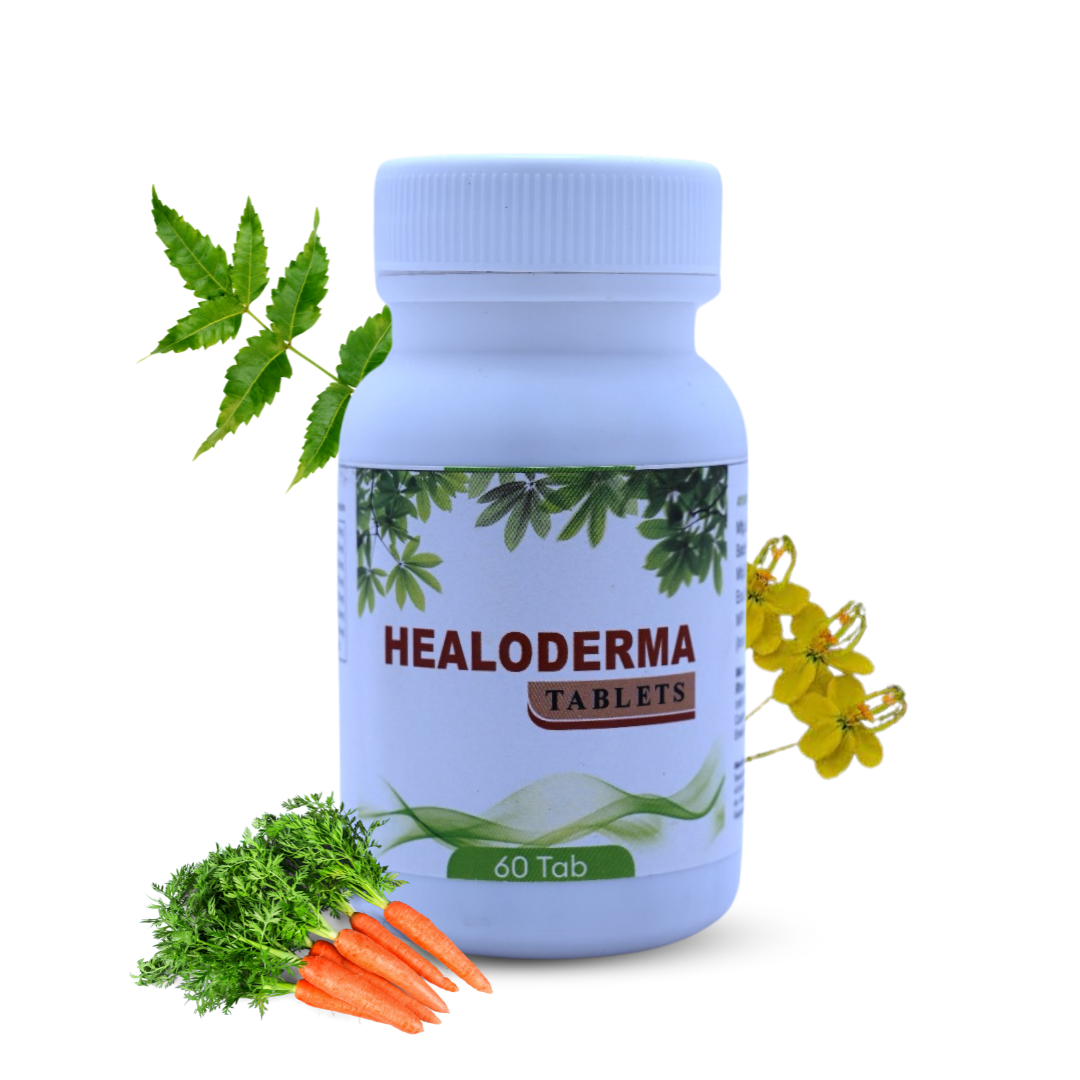
Tarushi Formulations Heloderma Tablets are crafted with a unique blend of natural ingredients to support skin health and enhance your natural radiance. This herbal formulation helps promote an even-toned appearance while nourishing the skin from within. Packed with the goodness of traditional Ayurvedic herbs, these tablets are ideal for maintaining a clear and healthy-looking complexion.
Ingredients
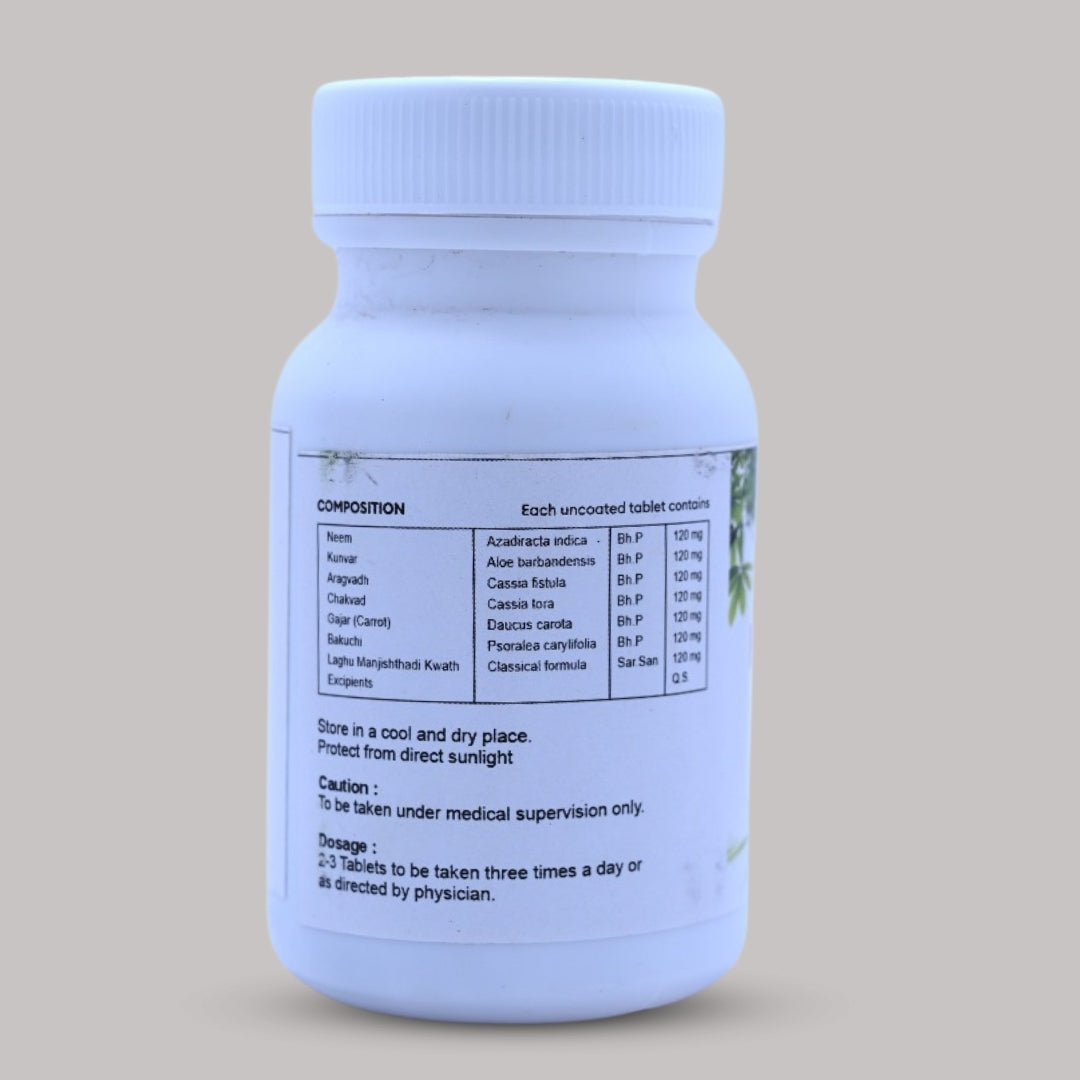
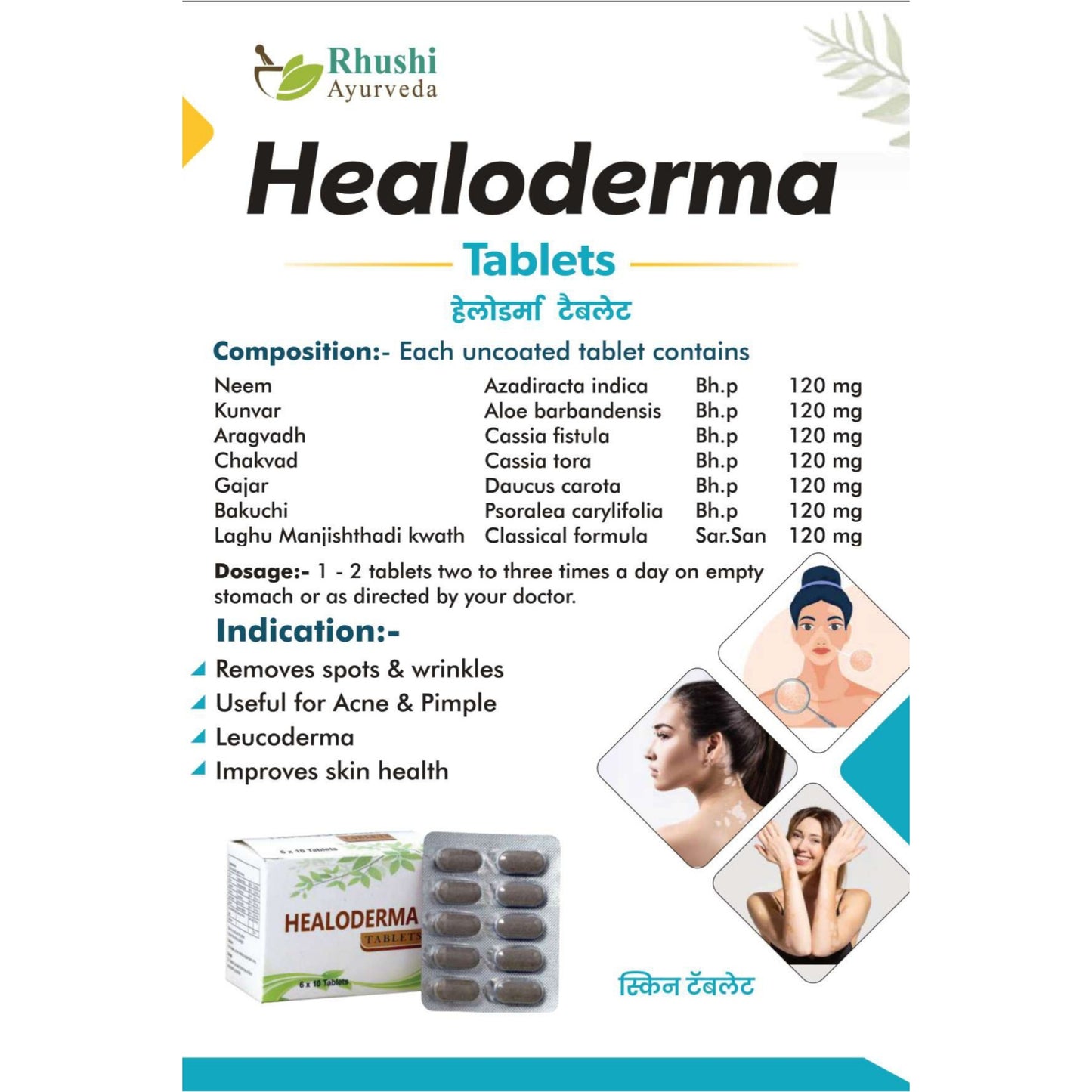
Neem, Kunvar, Aragvadh, Chakvaad, Gajar, Bakuchi, Laghu Manjesthadi Kwath
Dosage
2-3 tablets to be taken thrice a day or as directed by Physician.
Key Benefits
Enhances Natural Glow – Crafted to boost luminosity, these tablets help achieve a visibly refreshed and youthful look.
Balances and Soothes – Packed with time-tested botanicals, the formulation helps maintain harmony, leaving skin feeling calm and comfortable.
Holistic Wellness – Designed to complement daily self-care, this blend supports vitality, helping you feel confident inside and out.
Rooted in Purity – Inspired by ancient traditions, this formulation embraces the essence of nature, ensuring gentle yet effective care.
Frequently Asked Question
Q1. How long do I need to take Heloderma Tablets before I see visible improvement in skin tone and pigmentation?
ANS: Most users notice a gradual reduction in dullness and early improvements in evenness within 4–6 weeks, while meaningful fading of dark spots, pigmentation, and acne scarring typically becomes visible after 8–12 weeks of consistent use. Ayurvedic blood-purifying tablets work from within at a cellular level — they are not quick-fix whitening agents, and patience through the full course delivers the most sustainable results.
Q2. Can Heloderma Tablets help with hormonal acne and pigmentation from PCOS?
ANS: Yes — Laghu Manjisthadi Kwath is a classical Ayurvedic formulation specifically known for addressing Pitta-driven hormonal skin conditions including PCOS-related acne, inflammation, and post-inflammatory hyperpigmentation. Neem further regulates sebum production and fights acne-causing bacteria, making this formulation genuinely relevant for women whose skin issues are rooted in hormonal imbalance.
Q3. I have melasma (dark patches) from sun exposure or pregnancy — will Heloderma Tablets address this?
ANS: Manjistha (in Laghu Manjisthadi Kwath) is one of Ayurveda's most documented melanin-regulating herbs that inhibits tyrosinase activity — the enzyme responsible for excess melanin production that causes melasma. Combined with Bakuchi's depigmenting properties and Gajar's (carrot) beta-carotene content that supports skin cell turnover, Heloderma Tablets target the root biochemistry of melasma from within.
Q4. Is Bakuchi in Heloderma Tablets the same as Bakuchiol — the natural retinol alternative people talk about?
ANS: Absolutely correct — Bakuchi (Psoralea corylifolia) is the plant source of bakuchiol, which has become popular in modern skincare as a gentler, plant-based alternative to retinol. When consumed internally through Heloderma Tablets, Bakuchi's active compounds work systemically to support skin cell renewal, reduce pigmentation, and improve complexion — going deeper than any topical bakuchiol cream can reach.
Q5. Are Heloderma Tablets safe during pregnancy — especially for women struggling with pregnancy-related skin darkening?
ANS: Bakuchi is generally contraindicated during pregnancy as it can have uterine-stimulating effects, and Neem also has properties that are not recommended during pregnancy. Women experiencing skin darkening during pregnancy should consult their gynaecologist or Ayurvedic doctor before starting Heloderma Tablets rather than self-medicating.
Q6. Can Heloderma Tablets cause photosensitivity — should I avoid sun exposure while taking them?
ANS: Bakuchi is a known photosensitising agent that can increase the skin's sensitivity to UV light when taken internally — meaning sun exposure during the course of these tablets may actually increase the risk of tanning or irritation rather than reducing pigmentation. Using sunscreen of SPF 30 or higher consistently while taking Heloderma Tablets is not optional — it is essential for the treatment to work effectively and without adverse effects.
Q7. Can Heloderma Tablets be used alongside topical creams for skin, or will there be any conflict?
ANS: Heloderma Tablets work systemically from within the bloodstream, while topical creams address the skin surface — these two approaches are genuinely complementary and not conflicting. However, avoid using aggressive chemical-based topical treatments (like high-percentage AHAs, retinoids, or hydroquinone) simultaneously without a dermatologist's guidance, as the internal Bakuchi and Neem may alter skin sensitivity.
Q8. I have eczema or psoriasis — will Heloderma Tablets help or could they aggravate my condition?
ANS: Aragvadh (Cassia fistula) and Chakvaad (Cassia tora) in the formulation are among Ayurveda's best-documented herbs for chronic skin conditions like eczema and psoriasis, with strong anti-inflammatory and blood-purifying properties. For these conditions, Heloderma is potentially beneficial but should ideally be taken under an Ayurvedic physician's supervision as severe chronic skin disorders require a personalised approach rather than general supplementation.
Q9. Will Heloderma Tablets affect my urine colour — I've heard Manjistha can turn urine reddish?
ANS: Yes — Manjistha (Rubia cordifolia) contains natural red pigments (anthraquinones) that can impart a pinkish, orange, or reddish tint to urine, which is a completely harmless and expected effect of taking this herb internally. This is often actually considered a positive sign by Ayurvedic practitioners that the herb is being absorbed and working — it should not be confused with blood in the urine.
Q10. Can men take Heloderma Tablets for acne and uneven skin tone, or is it formulated specifically for women?
ANS: Heloderma Tablets are entirely suitable for men — skin pigmentation, acne, and uneven tone from sun damage, pollution, and hormonal fluctuations affect all genders equally. The blood-purifying and liver-supporting action of Manjistha Kwath and Neem is particularly relevant for men who experience acne and dull skin driven by toxin accumulation, dietary habits, or environmental exposure.

I started using Heloderma Tablets after struggling with dull skin and frequent breakouts, especially during stress and weather changes. I was a bit skeptical about taking supplements for skincare, but this one turned out to be a total game changer.
Within 2 to 3 weeks of daily use, I began noticing visible improvements—my skin looked more even-toned, softer, and had a natural glow. It also helped reduce small pimples and dryness around my cheeks. What I loved is that it didn’t cause any side effects or stomach discomfort, and it pairs well with my regular skincare routine.
I’ve been taking Heloderma Tablets for about 3 weeks now, and I’m already seeing a noticeable improvement in my skin! I’ve always struggled with acne, dullness, and occasional skin allergies, especially due to pollution and hormonal changes. A friend recommended these tablets as a natural Ayurvedic solution—and I’m so glad I tried them!
© 2025, Rhushi Ayurveda
Powered by Logam Digital