
₹0


MRP (Inclusive of taxes)
MRP ₹ (Incl. of all taxes)
Couldn't load pickup availability
Product Description
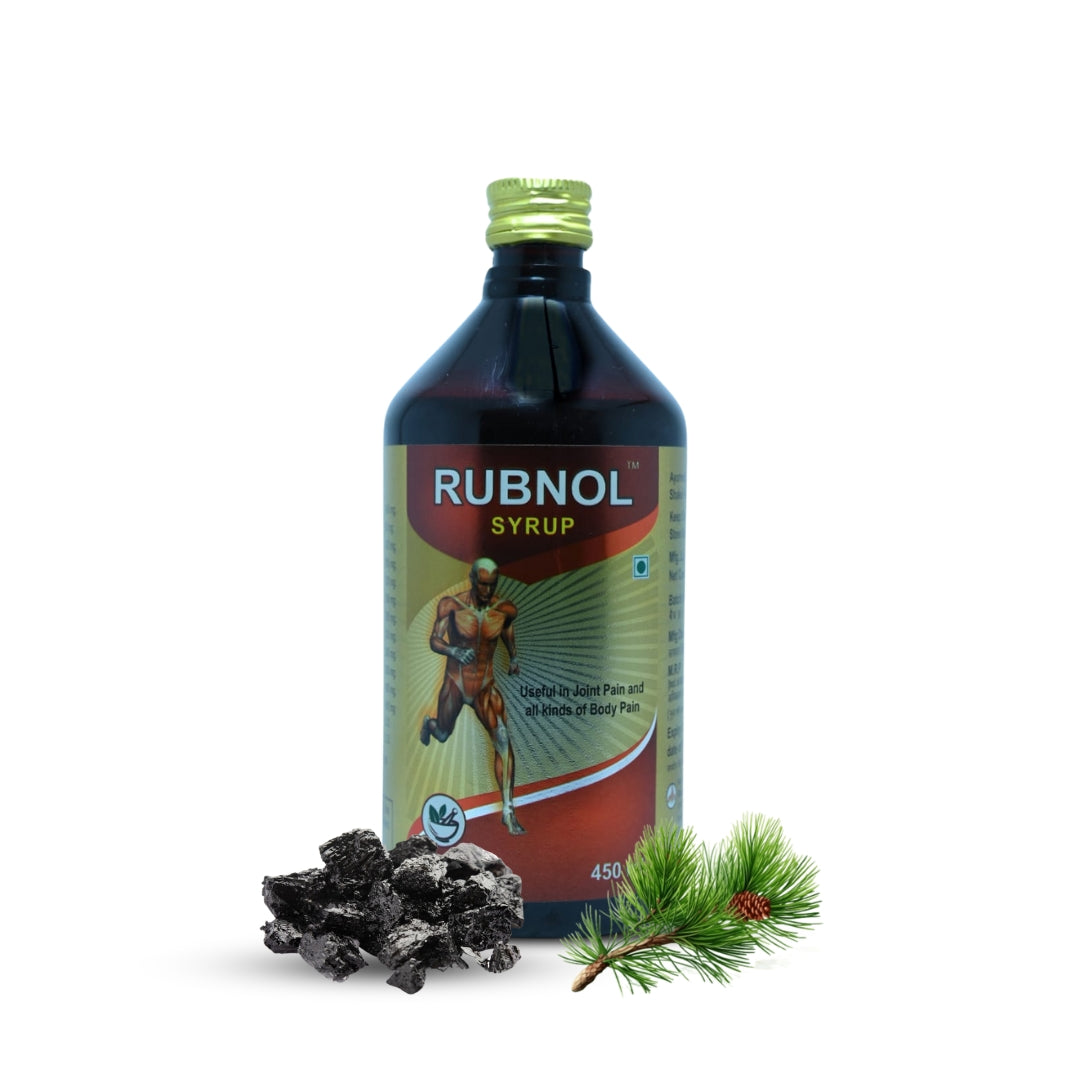
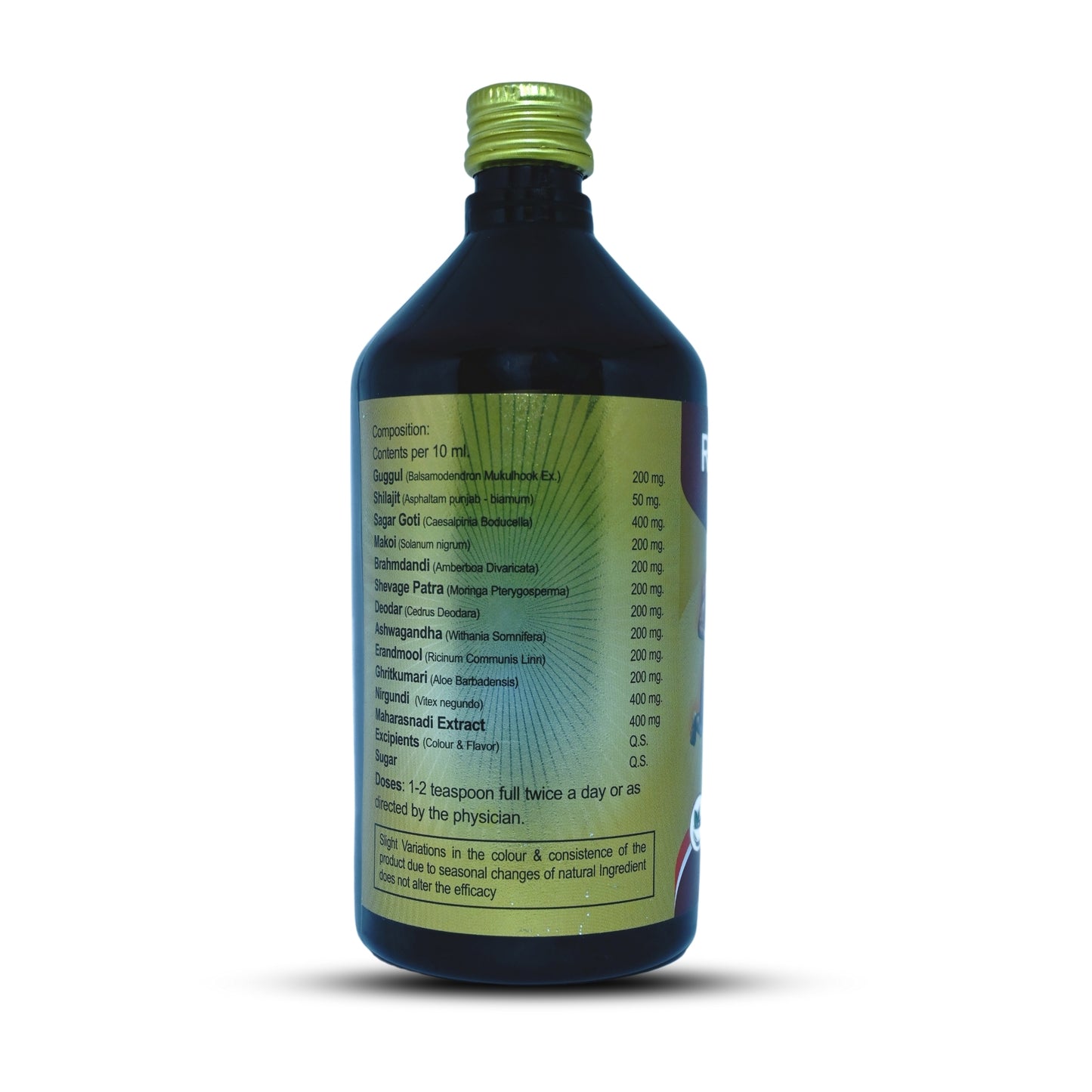
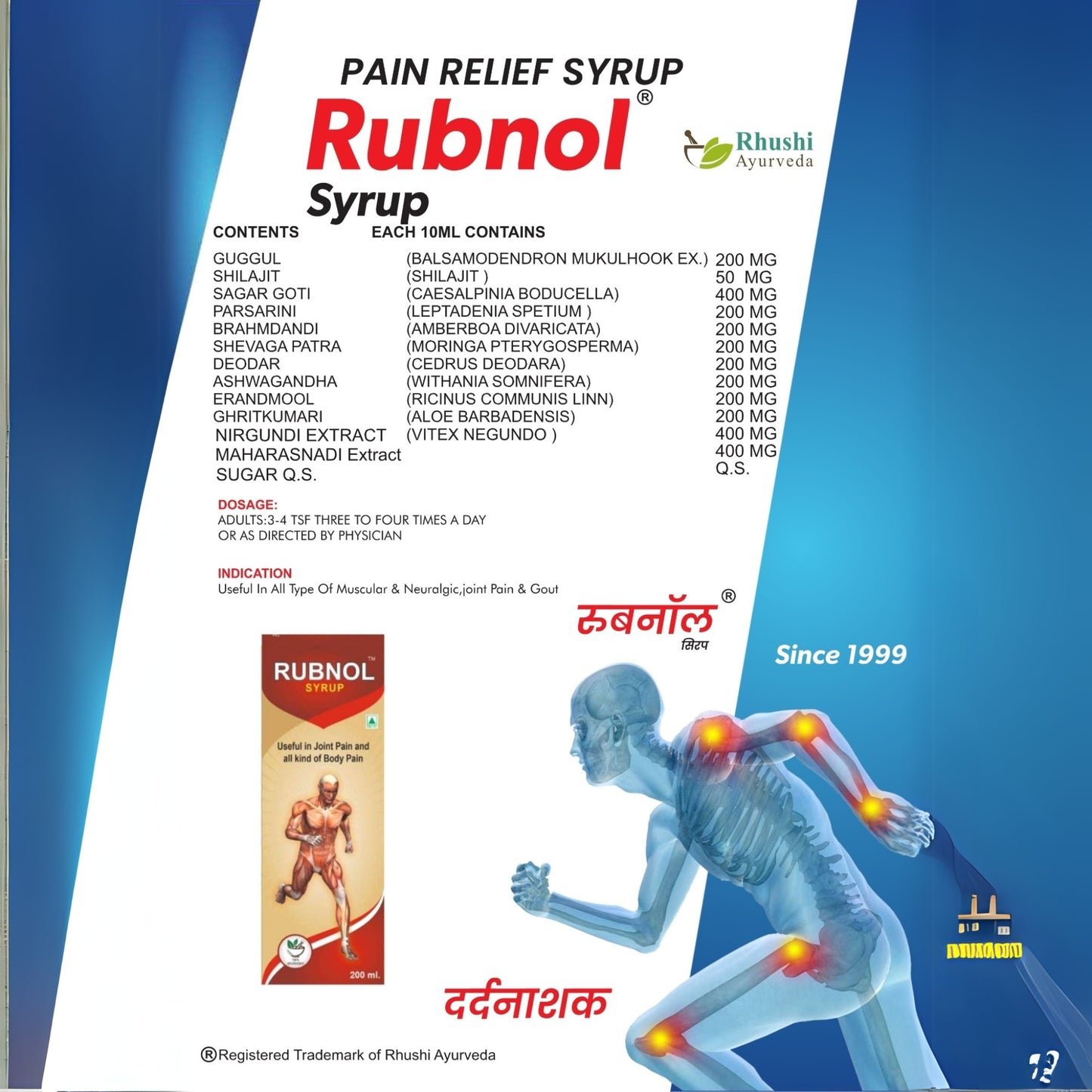
Rubnol Syrup is an Ayurvedic solution designed to help manage pain naturally. This herbal formulation contains powerful ingredients like Guggul, Shilajit, and Dashmool kwath, which are known for their ability to alleviate muscular, neuralgia, and muscle cramps. Whether you're dealing with muscle soreness or muscle discomfort. Rubnol Syrup offers a natural and effective remedy. Its potent blend of Ayurvedic herbs supports pain relief without harmful side effects, promoting overall well-being and comfort.
Ingredients
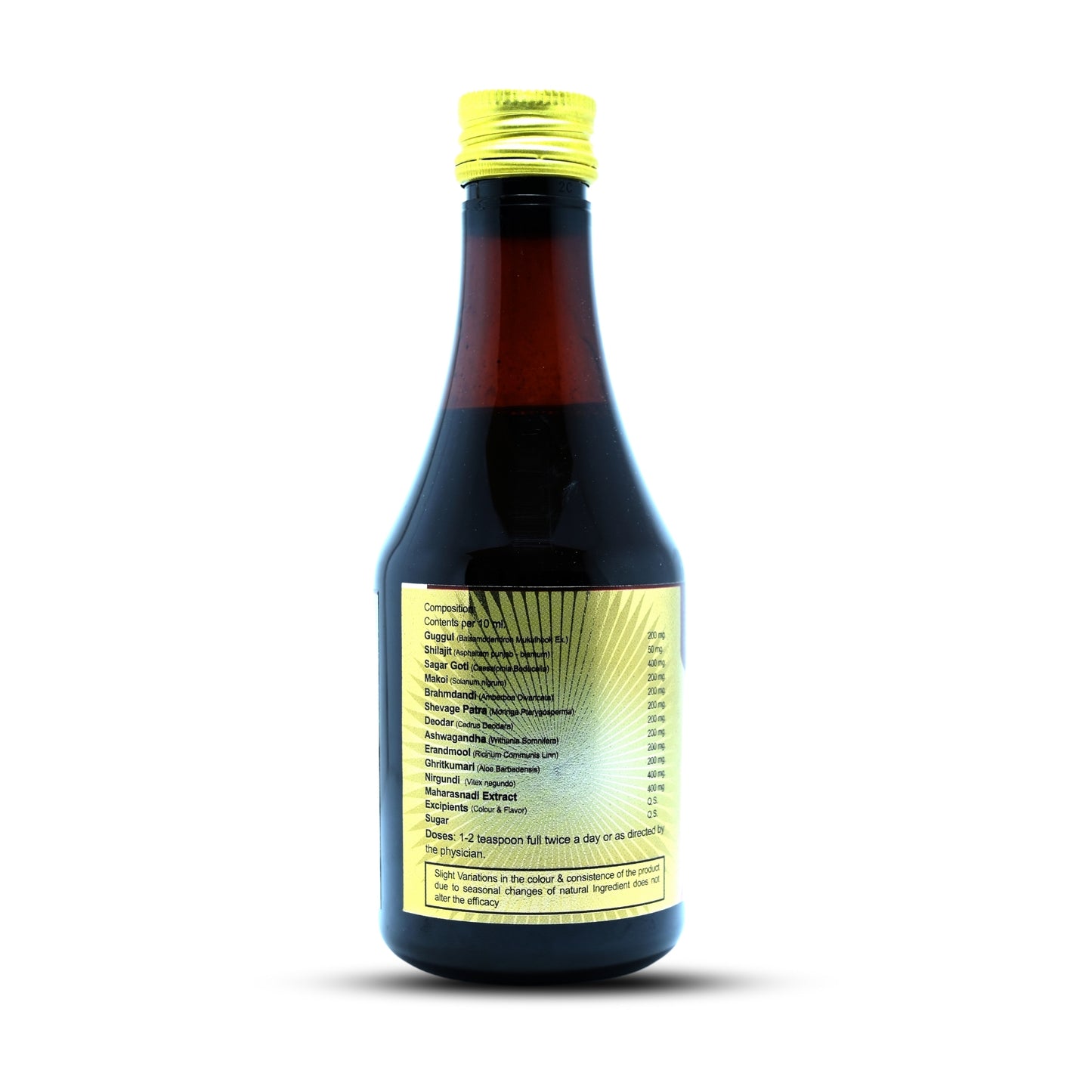
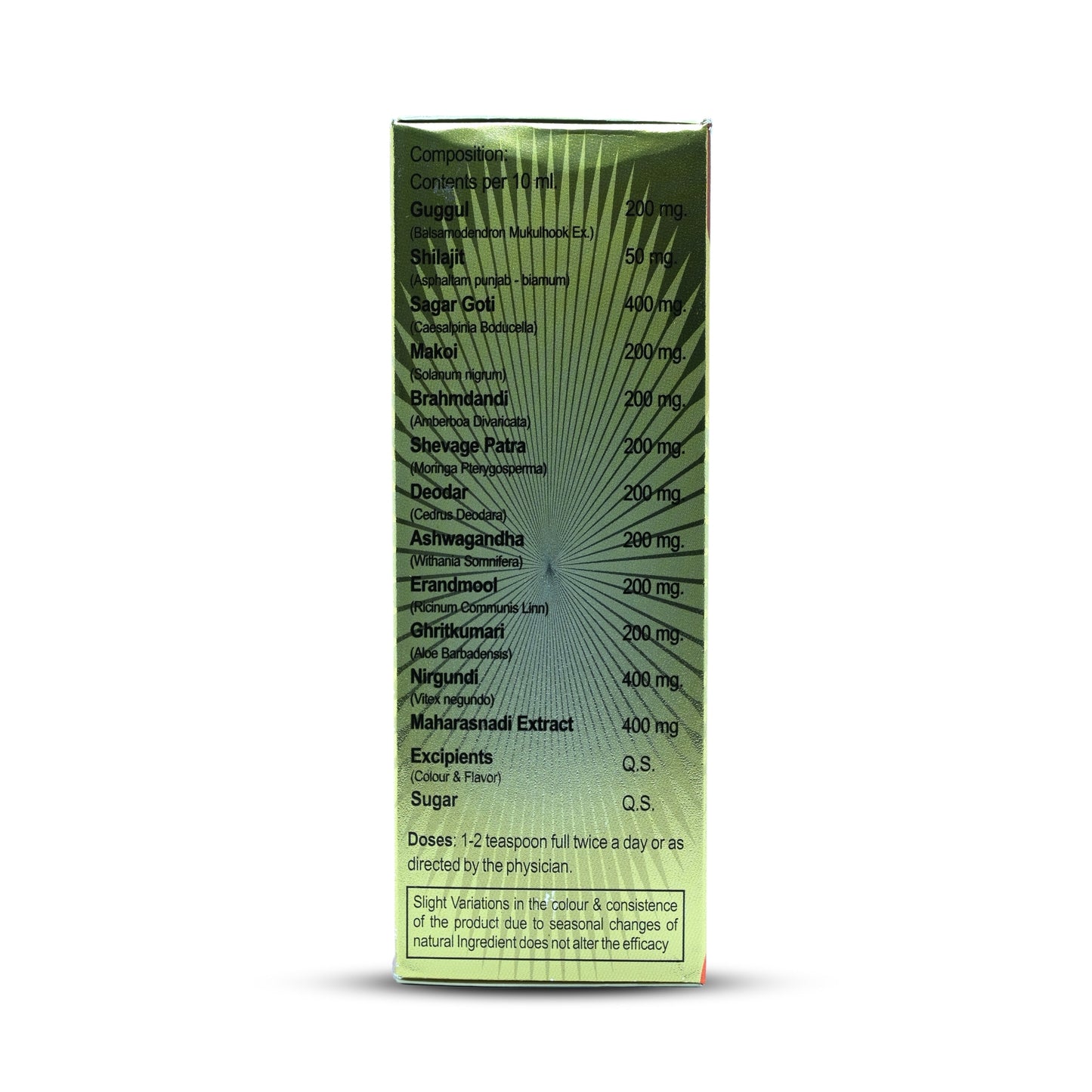
Guggul,
Shilajit,
Sagar goti,
Parsarini,
Brahmdandi,
Shevaga patra,
Deodar,
Ashwagandha,
Erandmool,
Ghritkumari,
Dashmool kwath,
Sugar Q.S.,
Dosage
Adults: Take 3-4 tsp three to four times daily or as directed by the physician.
Key Benefits
Relieves Muscular Pain: Provides relief from all types of muscular pain, including soreness and stiffness.
Manages Neuralgic Pain: Helps manage neuralgic pain and muscle discomfort, promoting mobility and comfort.
Overall Muscle Pain Relief: Aids in managing the pain and inflammation associated with gout naturally.
Ayurvedic Pain Relief: Offers a safe, herbal alternative to chemical pain relievers.
Frequently Asked Question
Q1. Is Rubnol Syrup just a liquid version of Rubnol Capsules, or is it a completely
different formulation?
ANS: Rubnol Syrup has a distinct ingredient profile — featuring Guggul, Shilajit, Sagar Goti,
Parsarini, Brahmdandi, Ghritkumari, and Dashmool Kwath — making it a different and
complementary formulation rather than simply a liquid version of the capsules. The syrup's
unique ingredients like Shilajit and Dashmool Kwath give it a stronger tissue-nourishing and
nerve-restorative edge, while the capsules are more joint-inflammation focused.
Q2. Can diabetic patients take Rubnol Syrup given it contains Sugar Q.S. in the base?
ANS: This is a legitimate concern — the Sugar Q.S. in the base means diabetics should exercise
caution, especially those on insulin or oral anti-diabetic medication. Additionally, Shilajit and
Guggul present in the syrup can mildly lower blood sugar levels independently, which could
compound the effect of anti sugar drugs — making a doctor's consultation essential before
use.
Q3. Is Rubnol Syrup suitable for women, or does the Shilajit content make it more of a
men's product?
ANS: Shilajit is often marketed toward men but is equally beneficial for women — it supports
energy, reduces inflammation, and helps with pain across genders. Women who are
pregnant, however, should avoid it, as Shilajit and Erandmool both have properties that are
contraindicated during pregnancy.
Q4. Can I take Rubnol Syrup and Rubnol Capsules together for faster results?
ANS: Yes — the syrup and capsules have non-overlapping key ingredients, making them
genuinely complementary rather than redundant when used together. The syrup's Shilajit
and Dashmool Kwath add a systemic tissue-rejuvenating and nerve-restoring layer that the
capsules alone don't cover.
Q5. Will Rubnol Syrup cause drowsiness — can I take it before driving or going to
work?
ANS: No — unlike conventional painkillers or muscle relaxants, Rubnol Syrup contains no
sedating agents and is explicitly formulated to be non-drowsy. You can safely take it before
work or driving, though taking it after meals is advisable to avoid any mild digestive
sensitivity on an empty stomach.
Q6. How is Rubnol Syrup different from other generic pain syrups available in the
market?
ANS: Most over-the-counter pain syrups work by chemically blocking pain signals (NSAIDs or
analgesics) and offer only symptomatic relief with potential gastric side effects. Rubnol Syrup
works through a multi-herb approach — combining Guggul's anti-inflammatory action,
Shilajit's mineral-rich tissue nourishment, and Dashmool Kwath's classic nerve and joint
restoration — addressing the root of musculoskeletal pain rather than just masking it.
Q7. Can elderly patients with multiple health conditions and on multiple medications
take Rubnol Syrup safely?
ANS: The all-herbal formulation makes it significantly safer than synthetic pain medications for
elderly patients, but Guggul and Shilajit can interact with thyroid medications, blood thinners,
and antisugar drugs. For elderly patients on multiple prescriptions, a quick check with their
physician before starting is strongly advisable.
Q8. I have a sensitive stomach and acidity issues — will Rubnol Syrup aggravate it?
ANS: Ghritkumari (Aloe Vera) present in the syrup actually has a gut-soothing and
anti-inflammatory effect on the digestive lining, making Rubnol Syrup gentler on the stomach
than most conventional pain medications. Taking it after meals will further minimise any
chance of gastric discomfort.
Q9 . How long does a bottle of Rubnol Syrup last, and is it safe for long-term continuous
use?
ANS: At a standard twice-daily dose, a typical 200ml bottle would last approximately 2–3 weeks.
The formulation is herbal with no habit-forming chemicals, but long-term use beyond 3
months is best done with periodic breaks and ideally with practitioner guidance, as Shilajit in
sustained high doses has not been extensively studied for indefinite use.
Q10. Can Rubnol Syrup help with post-workout muscle soreness, or is it only for
chronic pain conditions?
ANS: Yes — the anti-inflammatory and muscle-recovery properties of Shilajit, Ashwagandha, and
Dashmool Kwath in the syrup make it genuinely useful for acute exercise-induced soreness,
not just chronic conditions. Shilajit in particular has emerging research backing its role in
faster muscle recovery and reduced oxidative stress post-exercise.
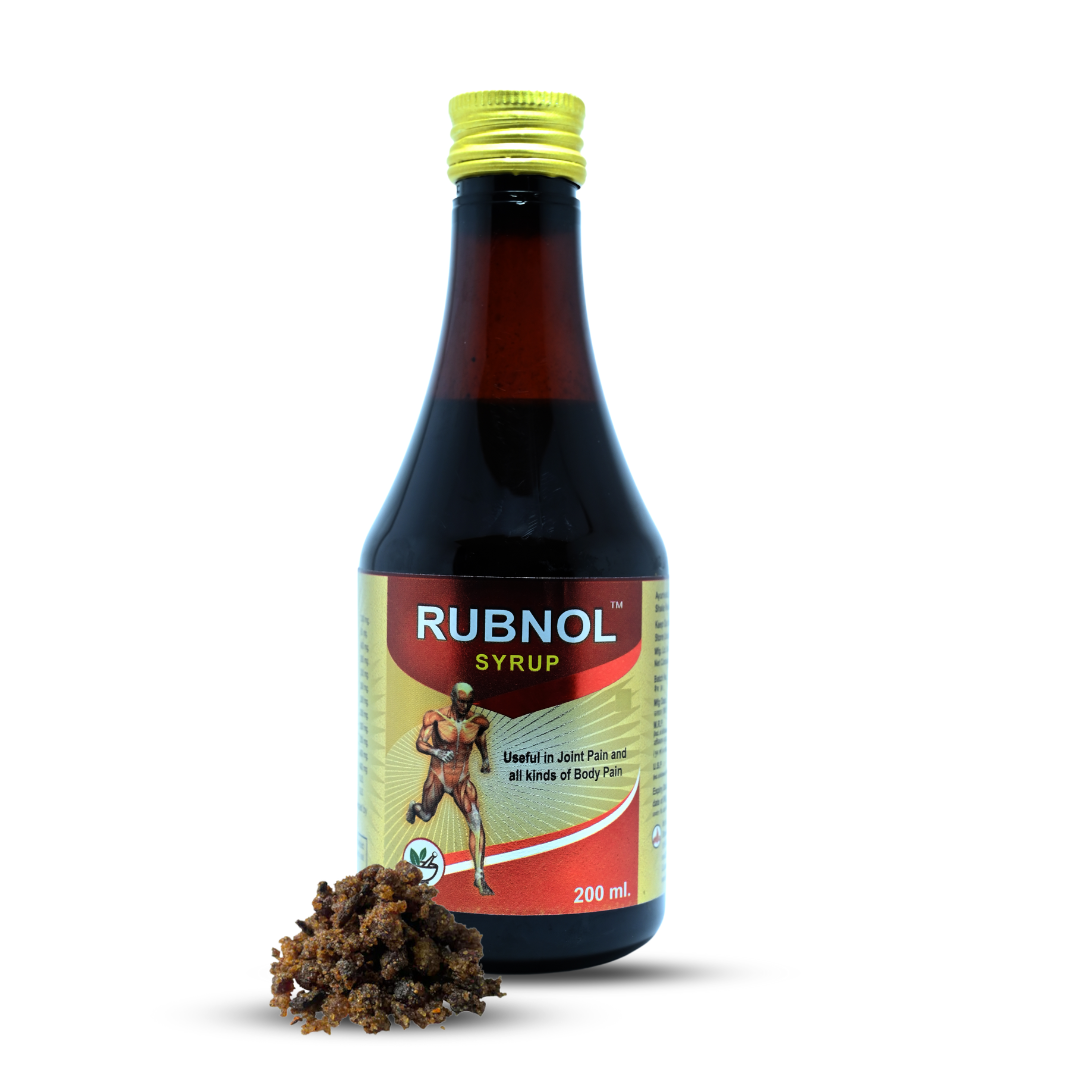


I’ve been using Rubnol Syrup for a couple of months now for joint and muscle pain, and I’m genuinely impressed with how well it works. As someone who suffers from occasional back pain due to long working hours, I was looking for a natural and ayurvedic option that didn’t have any side effects—and Rubnol was a great find.
Within 20–30 minutes of taking the syrup, I feel significant relief from pain and stiffness. It has a pleasant herbal taste, and more importantly, it doesn’t upset the stomach like some allopathic painkillers do.
I have been using Rubnol Syrup for the last 10 days, and I must say it works like magic. I had chronic back pain and muscle stiffness due to long working hours, and after taking this syrup twice a day, the relief was almost instant. No side effects, tastes decent, and feels very ayurvedic. Highly recommended for anyone struggling with regular pain or inflammation.
© 2025, Rhushi Ayurveda
Powered by Logam Digital