
Rs. 0.00


MRP (Inclusive of taxes)
MRP ₹ (Incl. of all taxes)
Couldn't load pickup availability
Product Description
Stonom Tablet by Rhushi Ayurveda is a carefully formulated Ayurvedic proprietary medicine designed to support kidney health and the overall renal system. Enriched with time-tested herbs like Pashanbhed, Gokhru, Punarnava, and Varun, this natural formulation helps maintain urinary tract health and supports the body's natural detoxification process.
Crafted with 100% natural ingredients and manufactured under GMP-certified practices, Stonom Syrup is designed to offer gentle yet effective kidney care support without added artificial colors or flavors.
A trusted Ayurvedic blend for those seeking natural renal wellness support.
Ingredients
Pashanbhed (Saxifraga ligulata)
Gokhru (Tribulus terrestris)
Punarnava (Boerhavia diffusa)
Varun (Crataeva nurvala)
Kalathi (Dolichos biflorus)
Palash (Butea monosperma)
Dhaniya (Coriandrum sativum)
Dosage
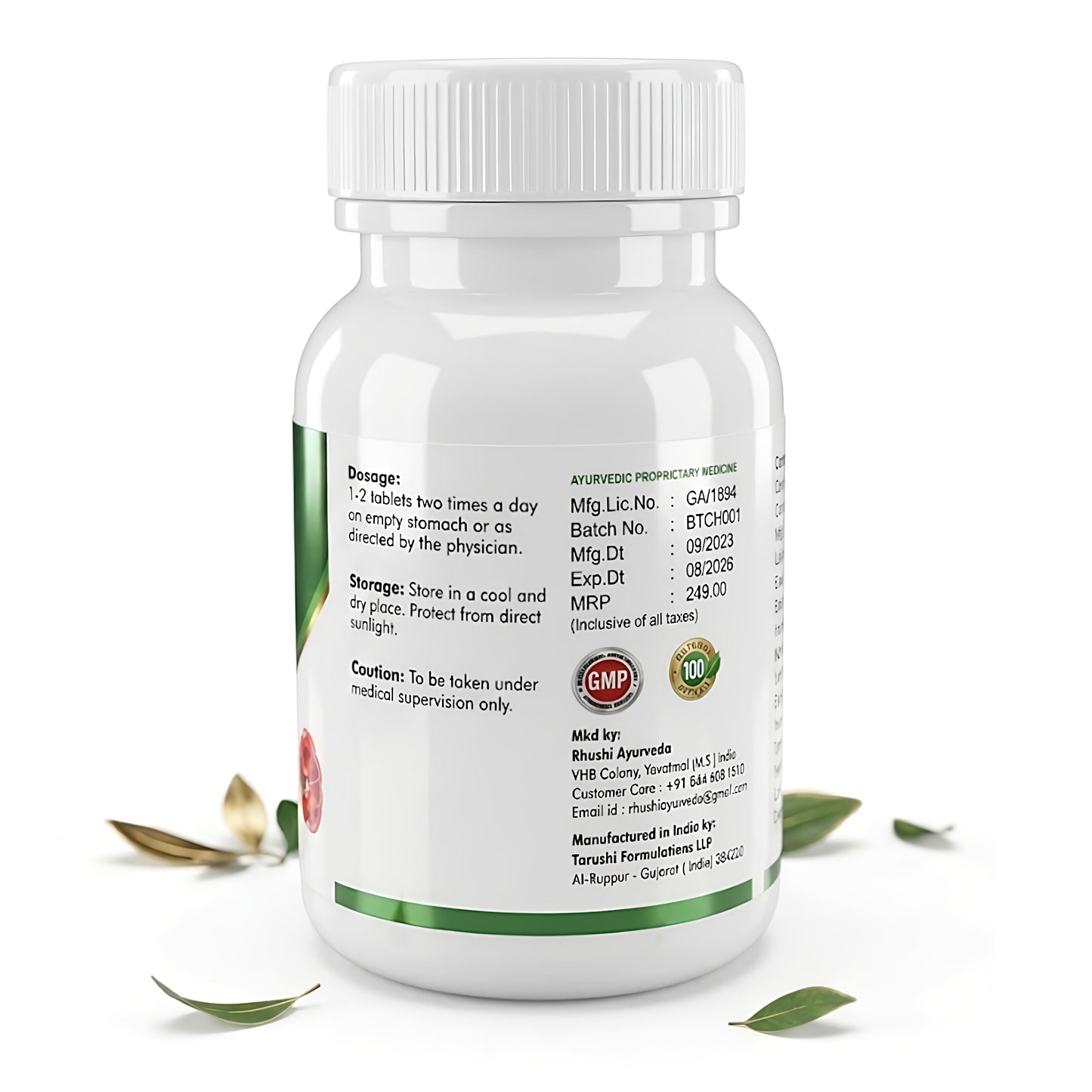
1 - 2 tablets two times a day on empty stomach or as direcled by the physician
Key Benefits
Supports overall kidney health
Helps maintain healthy urinary function
Assists in natural detoxification of the renal system
Supports urinary tract comfort
Helps maintain fluid balance in the body
Made with 100% natural ingredients
No added artificial color or flavor
GMP certified manufacturing
Frequently Asked Question
Q1. Is Stonom Tablet as effective as Stonom Syrup, or does the syrup absorb better?
ANS: Syrups generally have faster absorption as the active compounds are already in liquid form, making them slightly quicker-acting for acute symptoms like burning or urinary discomfort. However, tablets offer more precise dosing, better portability, and are more practical for long-term preventive use — so the syrup suits active flare-ups while tablets suit ongoing maintenance.
Q2. Can I take Stonom Tablets and Stonom Syrup together for a stronger effect?
ANS: Since both contain identical ingredients, taking both simultaneously simply doubles the dose rather than adding new therapeutic value — and unsupervised doubling of diuretic herbs like Gokhru and Punarnava can cause excessive urinary output and electrolyte imbalance. Stick to one form at a time, or consult your doctor if you feel current relief is inadequate.
Q3. Are Stonom Tablets easier to use for travel or long-term use compared to the syrup?
ANS: Yes — tablets are significantly more practical for daily travel, office use, and long-term kidney maintenance courses since they require no measuring, refrigeration, or careful handling. For patients on a 3–6 month preventive course post-stone-passage, tablets are the more sustainable and consistent format.
Q4. I have a stone in only one kidney — is it safe to take Stonom Tablets with a solitary kidney?
ANS: This requires extra caution — with only one functioning kidney, any diuretic herb (Gokhru, Punarnava) must be used under strict nephrological supervision as overloading a single kidney with increased urine output can accelerate its wear. Stonom Tablets can potentially be used as supportive therapy, but only with regular creatinine and urine monitoring and a doctor's explicit approval.
Q5. Can Stonom Tablets also help with gallbladder stones, or is it strictly for kidney stones?
ANS: Varun (Crataeva nurvala) and Pashanbhed have documented anti-lithiatic (stone-dissolving) properties that extend beyond the kidneys to the bile duct system, making Stonom potentially supportive for small gallbladder stones as well. However, gallbladder stones have different composition and risk profiles than kidney stones — always confirm suitability with your doctor before using it for gallbladder concerns.
Q6. Should Stonom Tablets be taken before food or after food — does timing affect how the herbs work?
ANS: Taking the tablets after meals with a full glass of warm water is generally recommended, as it reduces the chance of gastric irritation from the diuretic herbs and ensures better absorption of the active compounds. The ideal practice is to follow each dose with an additional glass of plain water to maximise the flushing effect of the formulation.
Q7. I've had kidney stone surgery (ESWL/lithotripsy) recently — can I start Stonom Tablets immediately after?
ANS: Post-surgical use of Stonom is actually well-timed, as the remaining stone fragments after lithotripsy need to be flushed out. The diuretic action of Gokhru and Punarnava, along with the anti-inflammatory properties of Varun, support this process. Most doctors recommend starting a herbal urinary support tablet within 1–2 weeks of ESWL to assist fragment clearance and reduce the risk of new stone formation.
Q8. I have both high uric acid AND kidney stones — do Stonom Tablets address both problems simultaneously?
ANS:Kalathi (horse gram/Dolichos biflorus) in the formulation is a well-documented Ayurvedic remedy specifically effective against uric acid stones, as it helps regulate uric acid metabolism and promotes its excretion through the urinary tract. Combined with Gokhru's broad renal support, Stonom offers a genuinely relevant dual benefit for people whose kidney stones are triggered by hyperuricemia.
Q9. Will taking Stonom Tablets turn my urine a different colour — should I be alarmed?
ANS:Palash (Butea monosperma) can occasionally impart a mildly yellowish or amber tint to urine, and the increased urinary output from the diuretic herbs may produce noticeably clearer, more frequent urination — both are expected signs that the formulation is working. Truly alarming changes include dark brown, red, or blood-tinged urine, or a sudden decrease in urine output, which warrant immediate medical consultation regardless of the course of treatment.
Q10. Can Stonom Tablets be taken as a daily health supplement by someone who has never had kidney stones but has a strong family history?
ANS:Yes — the herbs in Stonom, particularly Varun which prevents oxalate crystallisation, and Dhaniya which is a gentle urinary alkaliser, make it genuinely suitable as a preventive supplement for people genetically predisposed to kidney stones. A periodic preventive course (4–6 weeks every 3–4 months) alongside high water intake and a low-oxalate diet is a practical strategy for those with a strong family history.



© 2025, Rhushi Ayurveda
Powered by Logam Digital