
₹0


MRP (Inclusive of taxes)
MRP ₹ (Incl. of all taxes)
Couldn't load pickup availability
Product Description
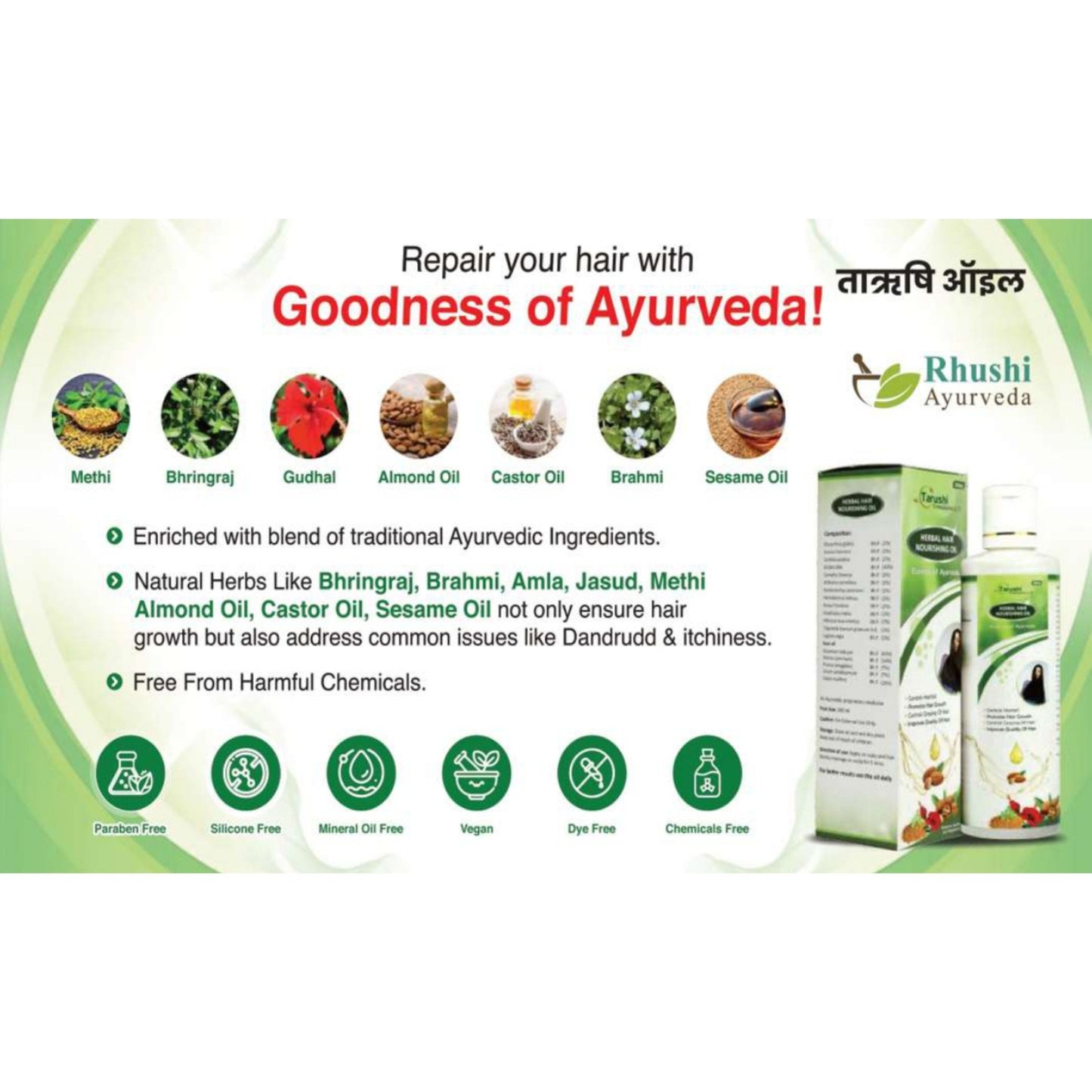
Revitalize your hair with Tarushi Hair Nourishing Oil, a premium blend of natural oils and herbs designed for healthy and lustrous hair. This chemical-free formula combines the goodness of Sesame Oil, Almond Oil, and Castor Oil with the power of Ayurvedic ingredients like Meethi, Bhringraj, Gudhal, and Bramhi. Perfect for your daily hair care routine, it helps nourish the scalp, strengthen roots, and add shine to your hair. This lightweight, non-sticky oil is paraben-free, dye-free, mineral oil-free, silicone-free, and vegan, making it a safe and eco-conscious choice for your hair care regimen. Suitable for all hair types, it’s the ideal companion for anyone seeking natural, toxin-free hair care solutions.
Ingredients
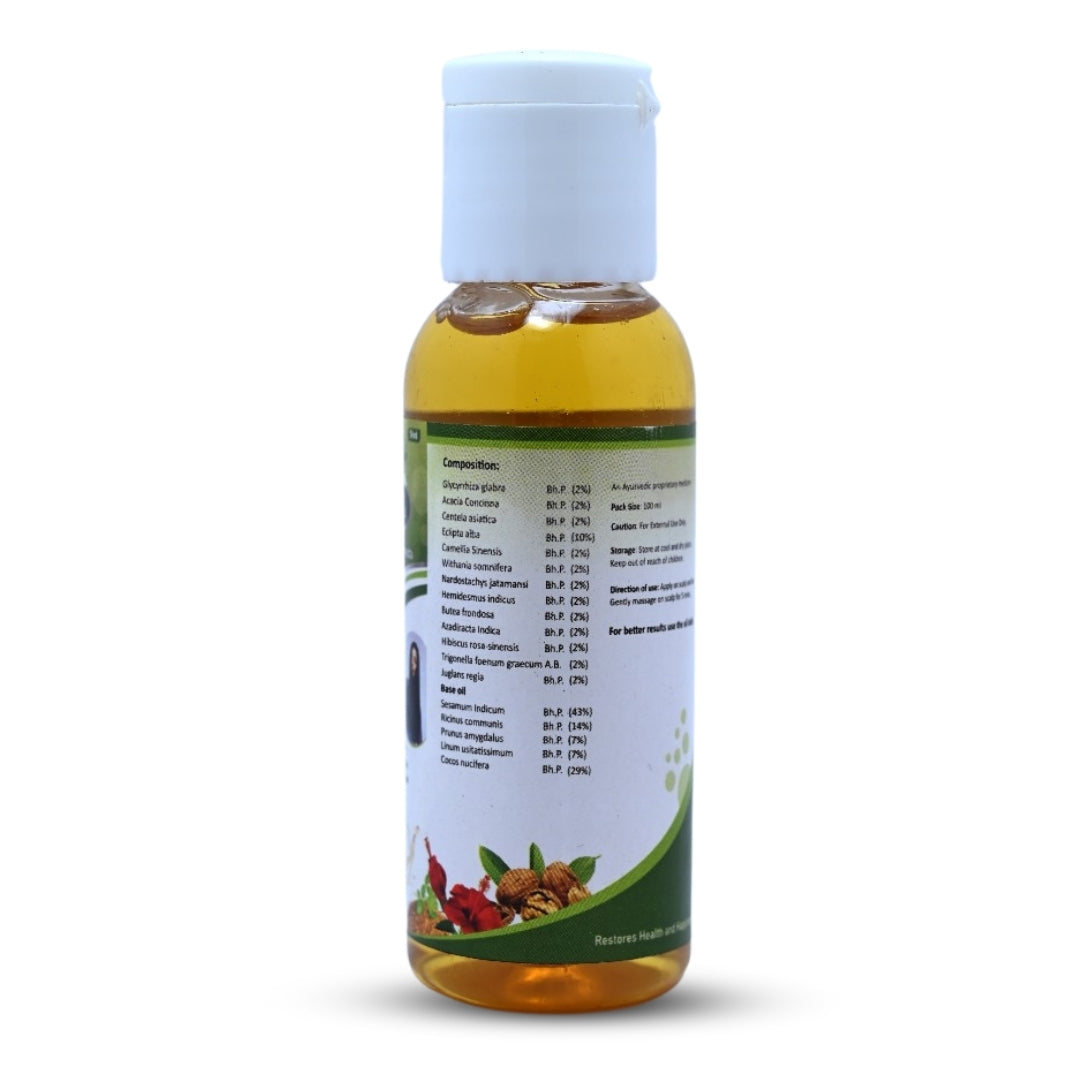
Glycyrrhiza glabra - Licorice,
Acacia concinna - Shikakai,
Centella asiatica - Gotu Kola or Indian Pennywort,
Eclipta alba - False Daisy or Bhringraj,
Camellia sinensis - Tea Plant,
Withania somnifera - Ashwagandha,
Nardostachys jatamansi - Spikenard or Jatamansi,
Hemidesmus indicus - Indian Sarsaparilla or Anantmool,
Butea frondosa - Flame of the Forest or Palash,
Azadirachta indica - Neem,
Hibiscus rosa-sinensis - Chinese Hibiscus or Shoe Flower,
Dosage
Apply on scalp and hair. Gently massage on scalp for 5mins.
Key Benefits
Deep Scalp Nutrition – Penetrates the roots to nourish and strengthen hair from within.
Boosts Hair Vitality – Enhances shine and softness while promoting overall hair health.
Supports Hair Growth – Infused with Ayurvedic herbs known to encourage thicker, fuller hair.
Safe for Sensitive Scalps – Free from harsh chemicals, making it gentle for everyday use.
Non-Greasy Formula – Absorbs easily without leaving a heavy or sticky residue.
Frequently Asked Question
Q1. How long should I leave Tarushi Hair Oil on — is overnight better than a few hours?
ANS: Leaving it overnight allows the Bhringraj, Brahmi (Gotu Kola), and Jatamansi to penetrate
deeply into the scalp and hair follicles for maximum nourishment and growth stimulation.
However, for oily scalp types, 1–2 hours before washing is sufficient and prevents excessive
greasiness or product buildup.
Q2. How often should I apply this oil for visible results in hair fall and hair growth?
ANS: Using the oil 2–3 times per week consistently for at least 3–4 months is the recommended
approach — Ayurvedic herbs like Bhringraj and Ashwagandha work cumulatively rather than
immediately. Most users notice reduced hair fall within 3–4 weeks and visible improvement
in hair density and texture after 2–3 months of regular use.
Q3. Should I warm the oil before applying — does heating it damage the herbal
ingredients?
ANS: Warming the oil gently using the indirect double-boiler method (placing the oil container in
warm water, not on direct flame) enhances scalp absorption and helps the herbal actives
penetrate deeper into the follicles without destroying them. Never microwave or heat directly
on a flame, as excessive heat degrades the active compounds in delicate herbs like Gotu
Kola and Jatamansi.
Q4. Can Tarushi Hair Nourishing Oil help with premature greying — or is it only for hair
fall?
ANS: Yes — Bhringraj (Eclipta alba) is one of Ayurveda's most documented herbs for slowing
premature greying, as it supports melanin synthesis in hair follicles. The combination of
Neem, Licorice (Glycyrrhiza glabra), and Anantmool (Indian Sarsaparilla) further supports
scalp detoxification and blood circulation, which are both linked to maintaining natural hair
colour.
Q5. I have dandruff and a flaky scalp — will the castor oil in this formula make dandruff
worse by being too heavy?
ANS: Castor oil's anti-fungal properties actually make it one of the most effective natural remedies
against Malassezia, the fungus responsible for most dandruff — so it helps rather than worsens the condition. The Neem and Shikakai in the formula further reinforce this antifungal
and cleansing action on the scalp, making Tarushi Hair Oil particularly relevant for
dandruff-prone scalps.
Q6. Can I apply Tarushi Hair Oil to coloured or chemically treated hair — will it react
with the colour?
ANS: The chemical-free, mineral oil-free, and silicone-free formulation makes it safe for
colour-treated hair, and the Sesame and Almond Oil base may actually help seal the hair
cuticle and extend colour longevity. It will not strip or react with hair colour — however, avoid
applying oil immediately before or after a colour treatment session (leave at least 48 hours
gap) to allow the colour to set properly.
Q7. Will Tarushi Hair Oil be too heavy and leave my fine hair looking flat and greasy?
ANS: The lightweight formulation without mineral oil or silicones means it absorbs significantly
better than conventional heavy oils, but fine hair types should still use a smaller amount (3–5
drops) focused on the scalp rather than coating the entire length of hair. Applying it to damp
hair (not dripping wet) also helps distribute it more evenly and prevents the weighed-down
look.
Q8. Can I use Tarushi Hair Oil on my beard or eyebrows — not just head hair?
ANS: Yes — the nourishing blend of Sesame, Almond, and Castor oils combined with
Ashwagandha and Gotu Kola supports hair follicle health regardless of location, making it
suitable for beard nourishment and patchy eyebrow growth stimulation. Use just a few drops
massaged into the beard or a fingertip amount on the eyebrows before bedtime for best
results.
Q9. Will Tarushi Hair Oil stain my pillow — and how do I get it out of my hair without
shampooing twice?
ANS: Using a towel or old pillowcase on nights when you oil your hair overnight is strongly
advised, as Castor and Sesame oils can leave residue on fabrics. To avoid double
shampooing, apply the shampoo directly to dry oiled hair first (before wetting it), massage
well, and then add water — this "dry shampoo method" cuts through oil far more effectively
than applying shampoo to wet oiled hair.
Q10. I have sinusitis — I've heard some hair oils shouldn't be left overnight in that case.
Does this apply to Tarushi Oil?
ANS: This is a traditional Ayurvedic caution that specifically applies to heavy herbal oils like
Mahabhringraj Tail left overnight, as the cooling herbs (Jatamansi, Brahmi) applied to the
scalp are believed to aggravate Kapha and sinus congestion in susceptible individuals
during overnight use. If you have chronic sinusitis, use Tarushi Hair Oil for 1–2 hours only
before washing, rather than overnight — daytime application eliminates this concern entirely



After months of hair fall and dryness, I was searching for a natural oil that actually works. A friend recommended Tarushi Hair Nourishing Oil, and I’m so glad I tried it. I’ve been using it 3 times a week, and within 2 weeks, I noticed less hair breakage, smoother texture, and a healthy shine.
I usually don’t write reviews, but after using Tarushi Hair Nourishing Oil, I felt like I had to share my experience. I’ve struggled with dry scalp, frizzy hair, and hair fall for quite a long time. I’ve tried everything from coconut oil to expensive serums, but nothing worked consistently—until I tried Tarushi.
What really impressed me is how lightweight and non-sticky the oil is. It doesn’t feel heavy or greasy, and the natural, herbal smell is actually quite relaxing. I massage it into my scalp twice a week and leave it overnight. The next morning after washing, my hair feels super soft, manageable, and has a natural shine to it.
© 2025, Rhushi Ayurveda
Powered by Logam Digital